Listens while you sleep. Shows you what it heard.
Put your iPhone beside the bed and tap once. In the morning you get a score for the night, the reason behind it component by component, and the clips to listen to. Recordings never leave your phone.
Coming soon to the App StoreFree to use. Premium unlocks full history and the doctor report.
- No account, no server
- Works without a watch
- Evidence-graded advice
- PDF for your doctor
- 9 languages
A look inside Loir
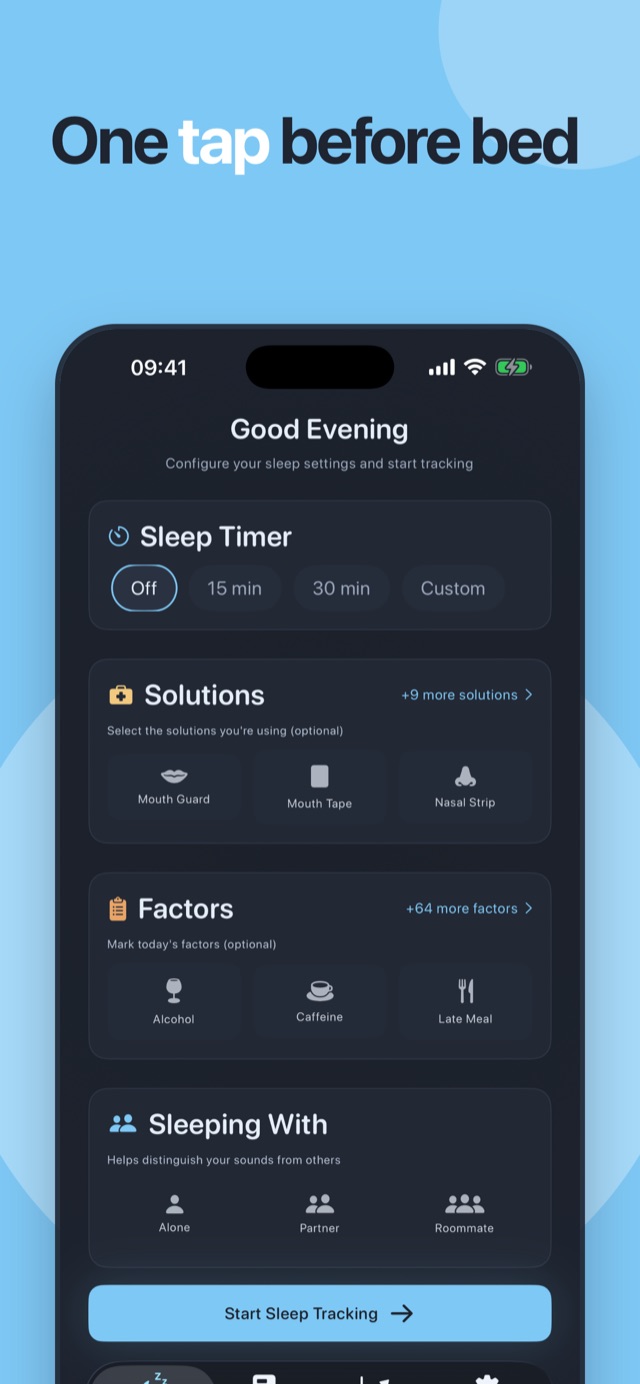
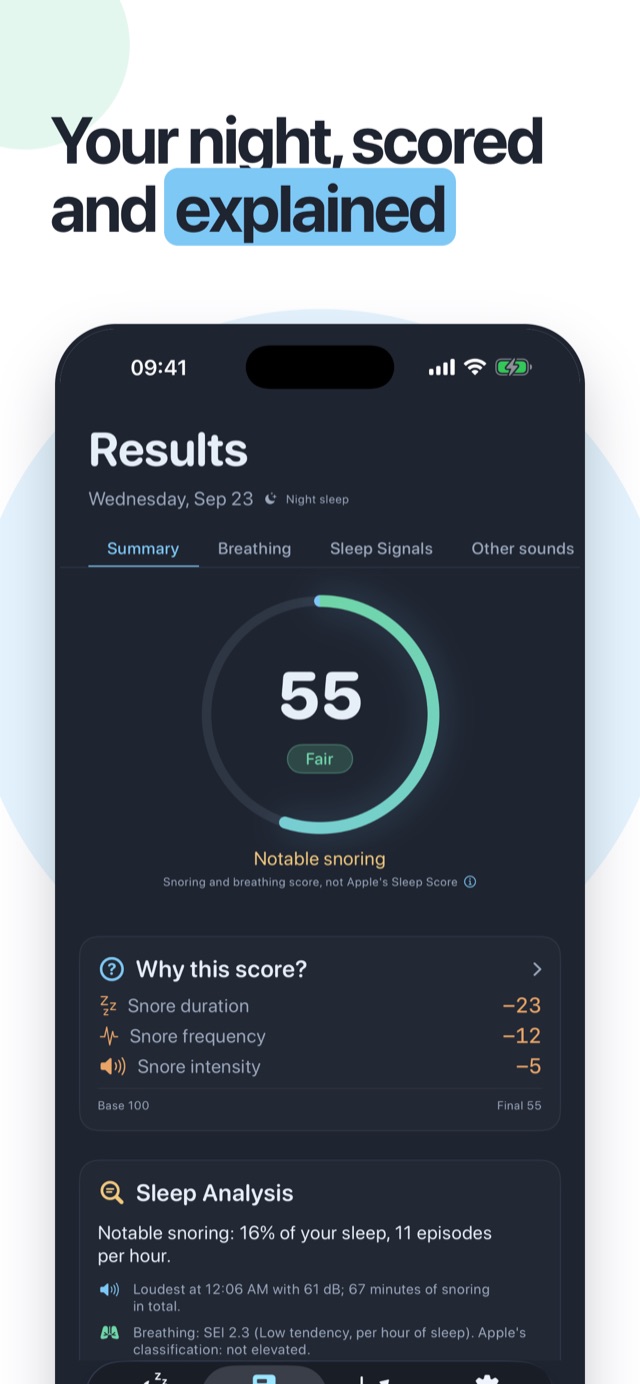
A score you can argue with
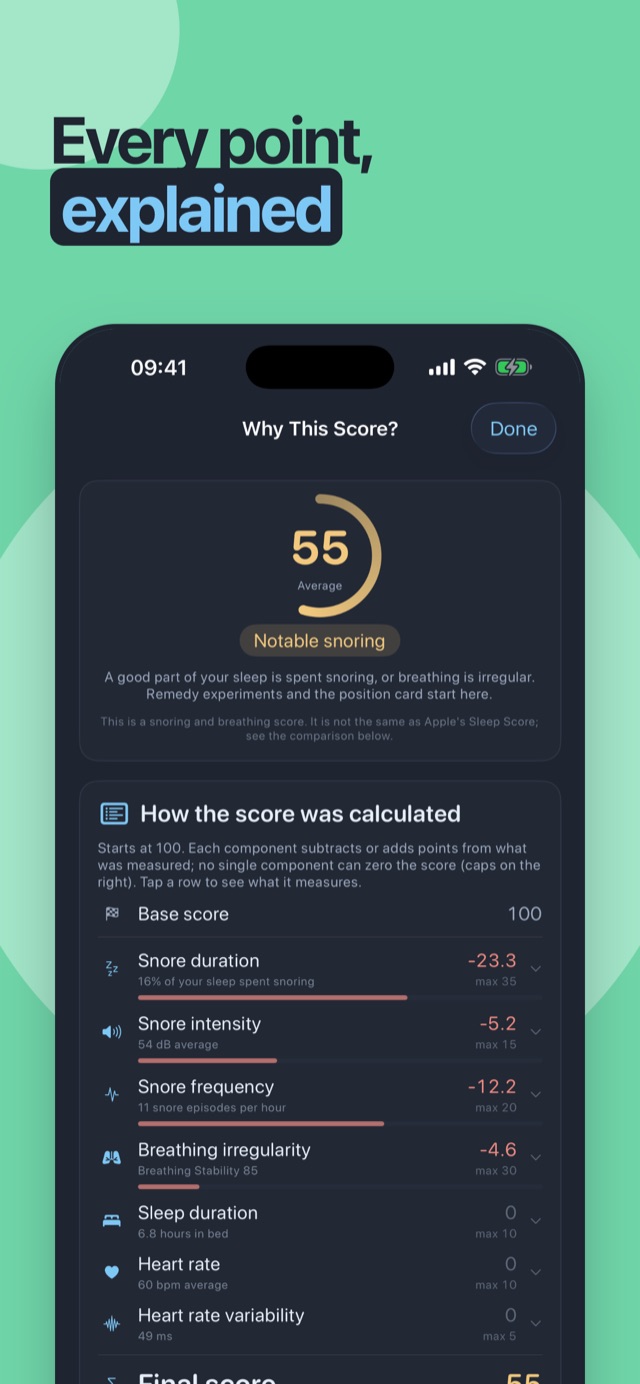
Most sleep apps hand you a number. Loir hands you the number and the arithmetic behind it. The night score starts at 100 and every component subtracts from it: how long you snored, how loud it was, how often episodes came, how steady your breathing was, how long you were in bed.
Tap any row and it tells you what it measured — "16% of your sleep spent snoring", "54 dB average", "11 snore episodes per hour" — and the cap on that component, so no single bad number can drag the score to zero. If you disagree with the score, you can see exactly where it came from.
- Snore duration, intensity and frequency, each with its own ceiling
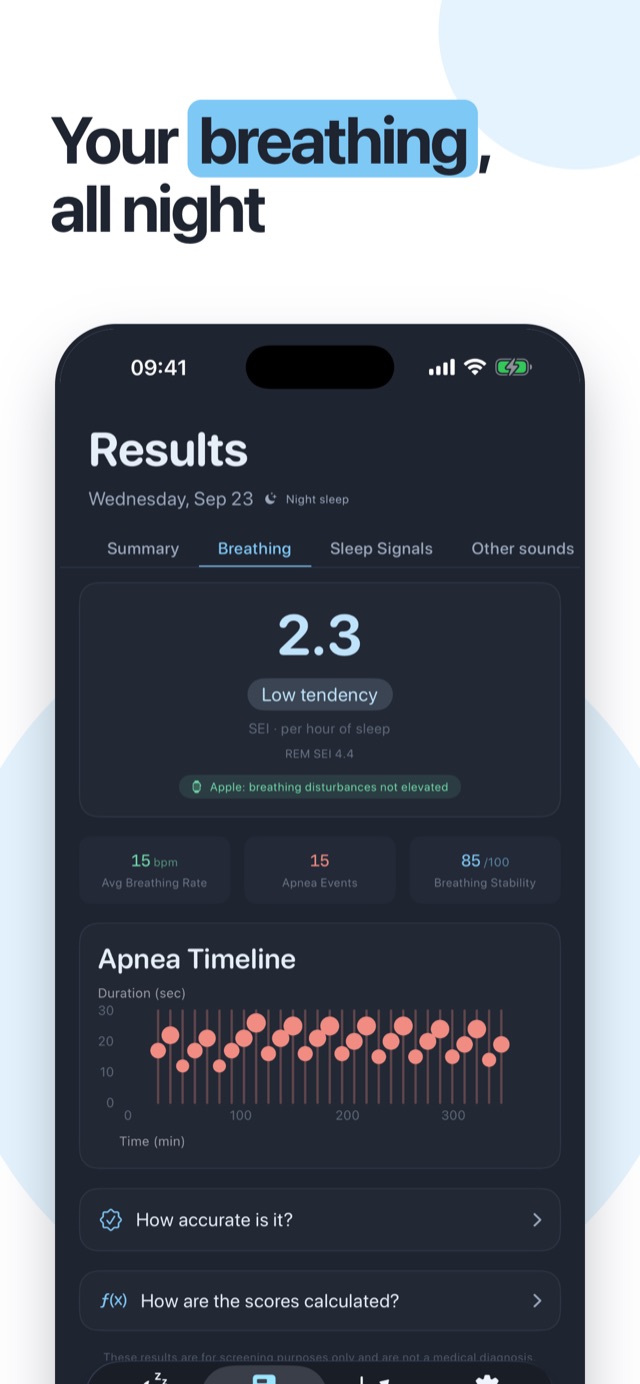
- Breathing irregularity from a stability measure, not a raw event count
- Time in bed, heart rate and heart rate variability when a watch is present
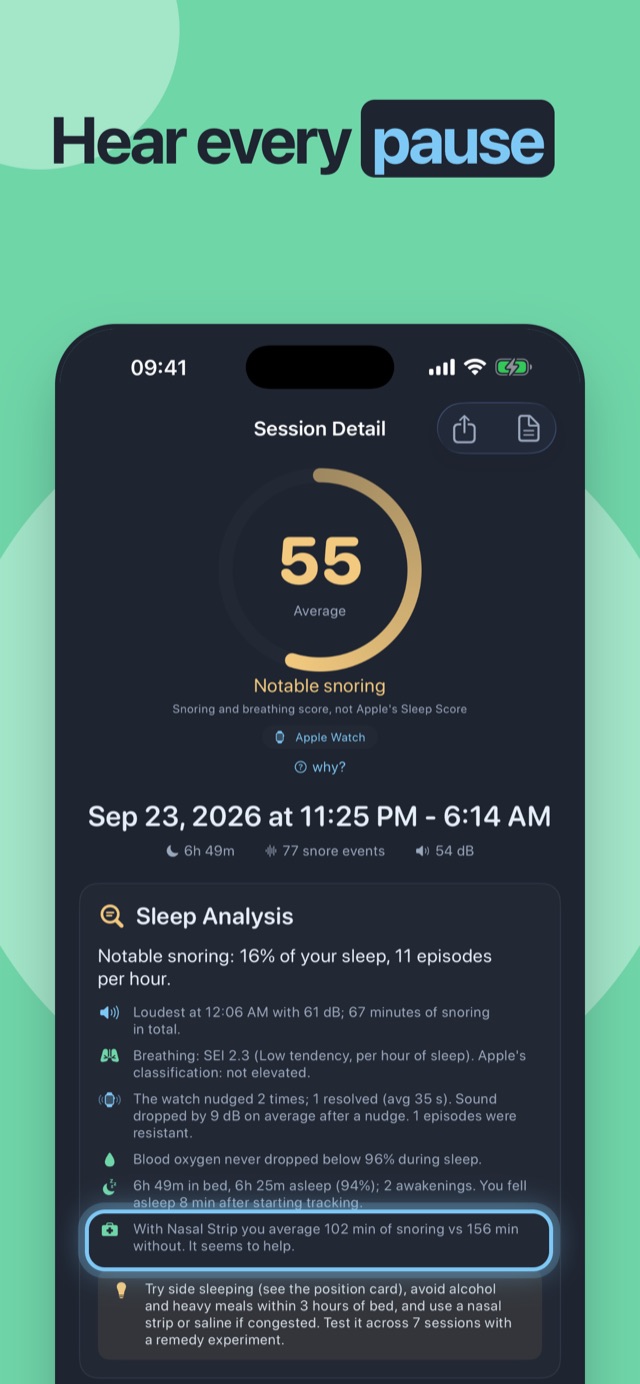
- A plain-language summary of the night written as sentences, not gauges
Listening is the point
A number tells you that you snored. A recording tells you what it sounded like, and whether it was even you. Loir keeps the night audio on the phone and marks every snoring episode and every breathing pause as a clip you can play.
You can jump from a clip into the full night recording, skip ten seconds at a time, and hear what came before and after. If a sound was your partner, a fan or the television, you will know in seconds.
- Every snoring episode and breathing pause is a playable clip
- Open any moment inside the full-night recording and scrub around it
- Sort by loudest or longest to find the worst part of the night fast
- Recordings are stored on the device and can be exported or deleted by you
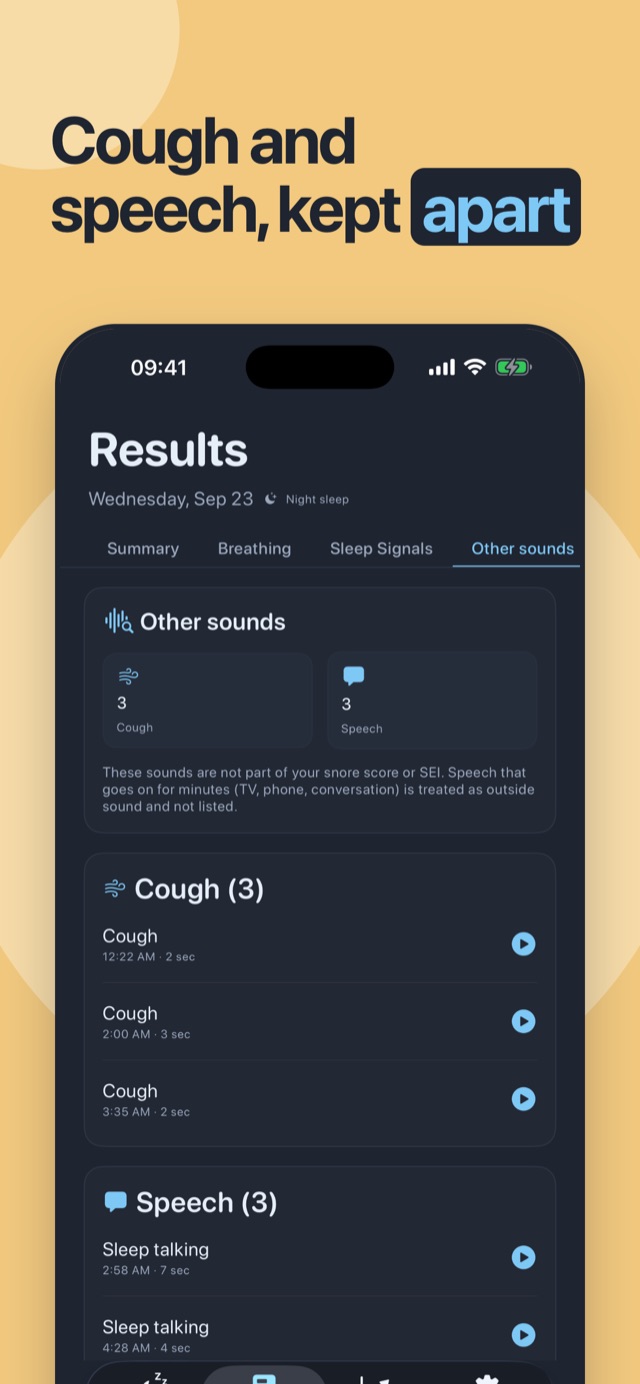
Cough and speech are kept out of your snore score
Snoring is not the only thing a microphone hears at night. Loir detects coughing and sleep talking as their own categories and lists them on a separate tab. They never touch the snore score and never inflate it.
This matters more than it sounds. An app that counts a cough as snoring will tell you that a bad cold was a bad snoring week. Loir will tell you that you coughed on seven nights and show you what those nights had in common.
Speech clips can be switched off entirely in settings if someone else shares the room.
What the Apple Watch adds
Loir works on the iPhone alone. With an Apple Watch on your wrist it sees things a microphone cannot, and it can act during the night instead of only reporting in the morning.
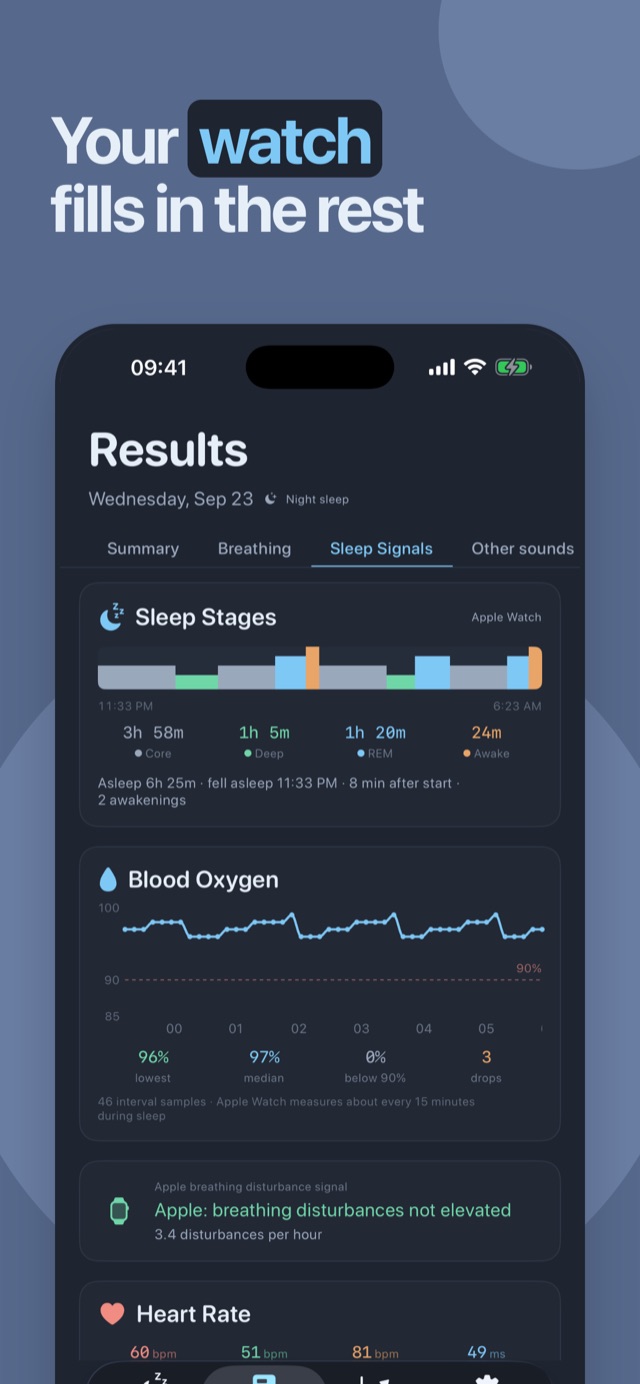
The watch contributes sleep stages, blood oxygen, heart rate and heart rate variability, wrist temperature against your own baseline, and your sleeping position from the accelerometer. Position is the one that most often changes behaviour: seeing that you spent 73% of the night on your back explains a lot of snoring.
- Sleep stages from Apple Health, so the index is per hour of sleep rather than per hour in bed
- Blood oxygen through the night with the 90% line marked, and how many samples fell below it
- Heart rate, HRV and wrist temperature compared with your own baseline
- Sleeping position and turn count from the wrist accelerometer
- A gentle haptic nudge when snoring builds, with a nightly budget you control
- Automatic start when the watch detects you have fallen asleep, if you enable it
The nudge is measured, not assumed: Loir records whether the sound actually dropped after each vibration and shows you the resolved rate.
Advice built from your own nights
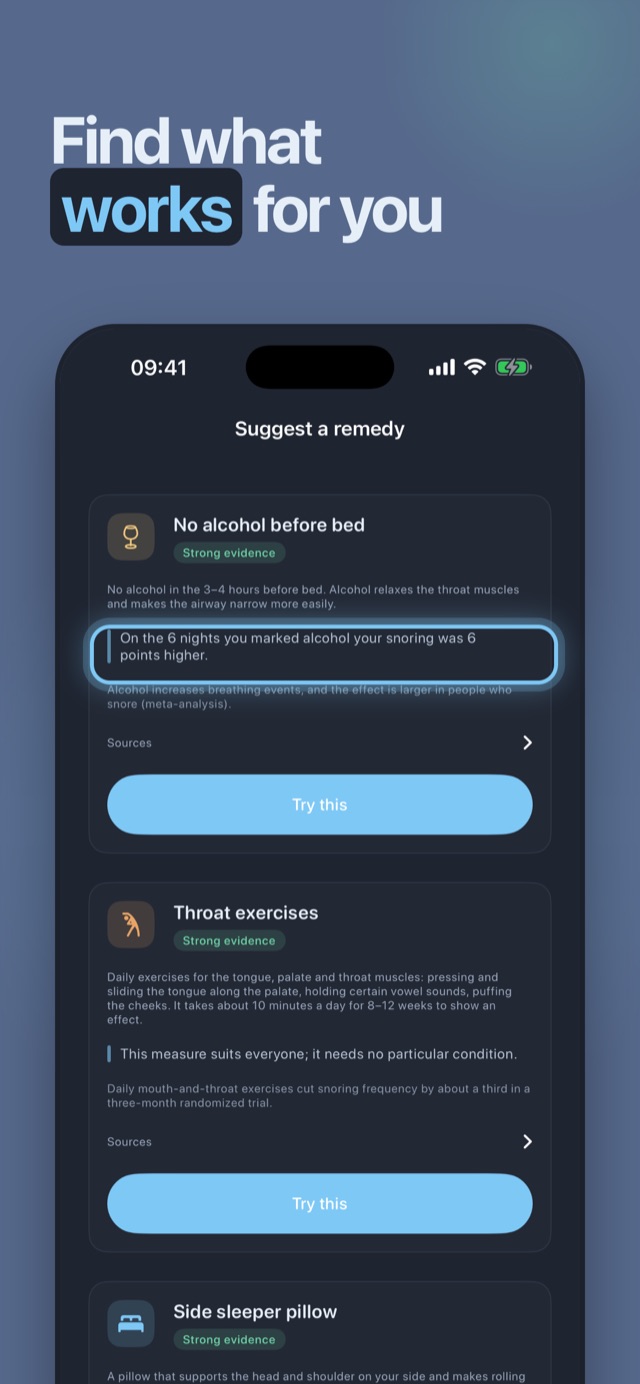
"Suggest a remedy" is not a list of tips. It reads what your nights actually show — how much of the night you spend on your back, whether your nose is blocked, which factors line up with louder nights, your BMI and your risk answers — and proposes measures that fit that picture.
Every measure carries an evidence level and the study behind it. A measure that would be wrong for you is marked as such rather than quietly hidden, and you can turn any suggestion into a before-and-after experiment that Loir scores for you.
- Positional therapy, nasal measures, oral appliances, throat exercises, weight and alcohol timing
- Evidence levels from strong to none, with the source for each
- Reasons written from your data: "your watch saw you on your back for 42% of the night"
- Run it as an experiment: Loir compares the nights before and after
Weeks, not nights
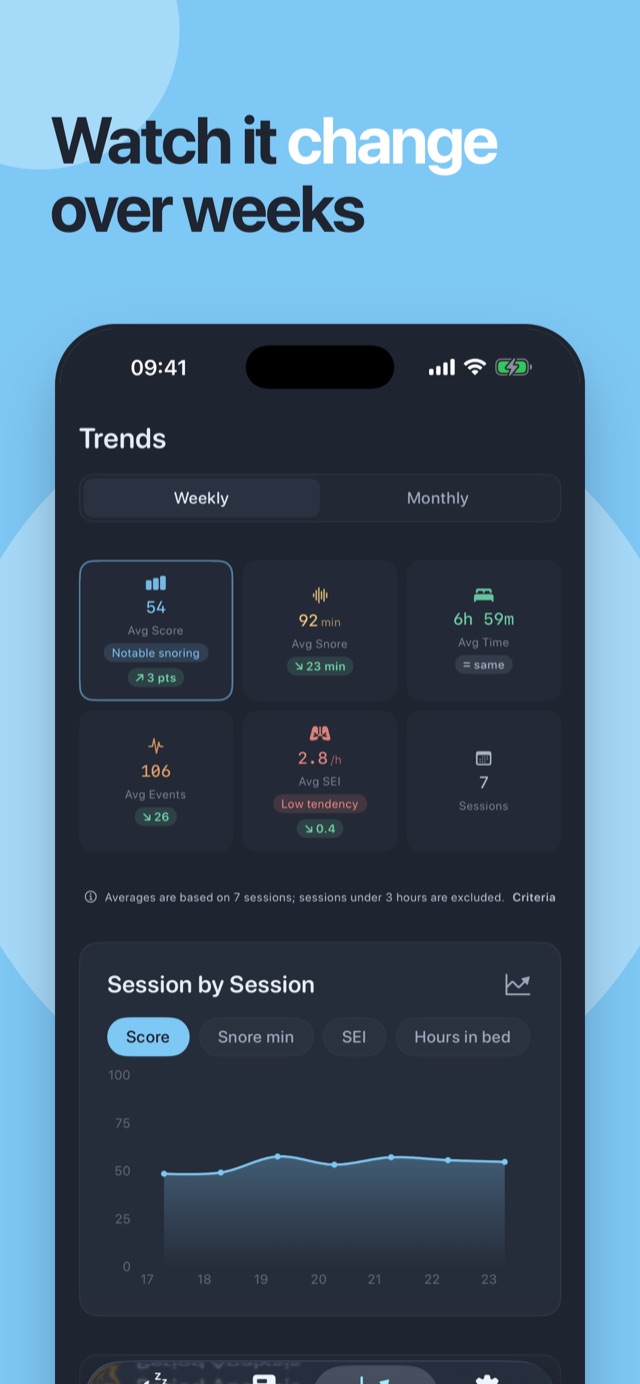
One night tells you very little. Loir keeps averages for the week and the month, compares them with the period before in real units rather than percentages, and writes the period out as sentences: what changed, which night was best, what you had marked that night, which remedy you were using.
Night sets answer the questions a chart cannot. Pick the nights you coughed, the nights you talked in your sleep, your loudest nights or the nights your oxygen dipped, and Loir compares them with all your other nights across snoring, breathing, score, sleep length, oxygen and how rested you felt.
- Weekly and monthly averages with the change shown in minutes, points and events
- Session-by-session chart with six selectable series
- Night sets: "the nights I coughed" against the rest, with the difference spelled out
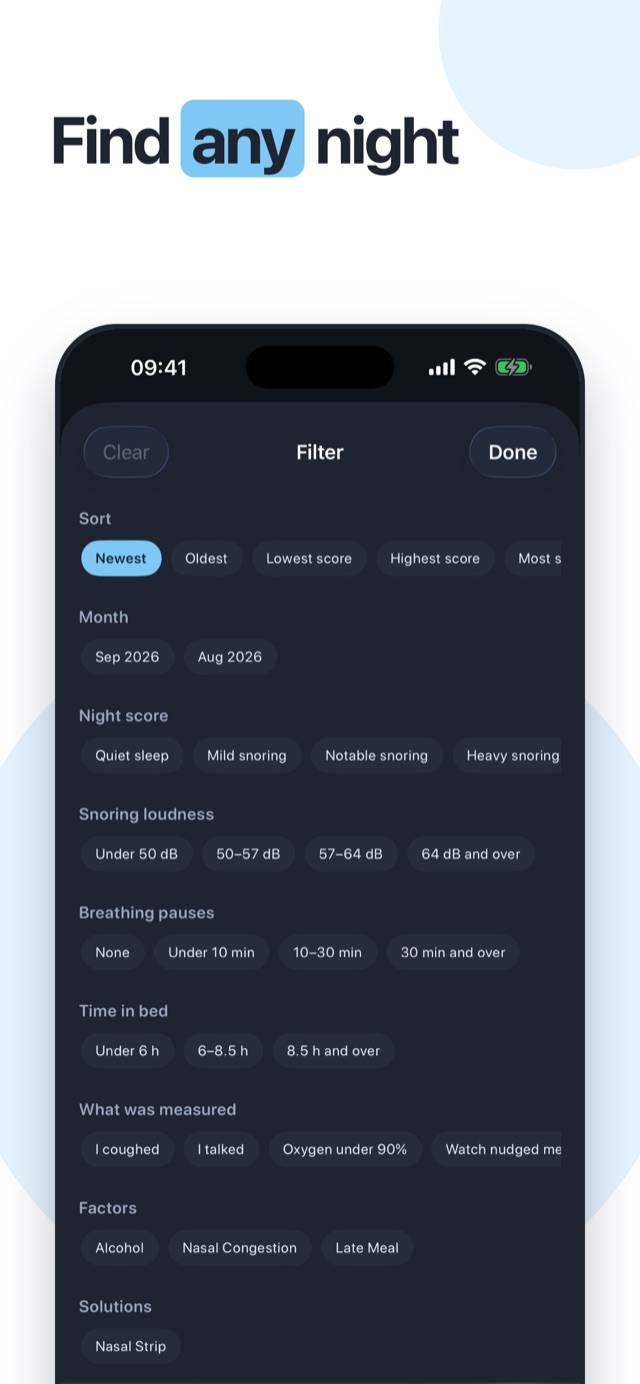
- A filter for every night you have recorded: month, loudness, pauses, factors, solutions
Something to hand your doctor
The doctor report is a PDF covering 7, 15 or 30 days. It carries the numbers, the method, your own notes and the known limits — built to be handed over, not to replace a consultation.
The cover states the window you chose, how many nights fell inside it, how many were too short to count and how many nights you have recorded in total. A one-week report cannot hide that there are sixty other nights behind it.
Honest about what it cannot do
Loir is not a medical device and does not diagnose anything. The sound event index it reports is an estimate from audio: it is not the AHI of a sleep study, it cannot detect hypopnea, and it does not replace medical testing.
The app carries a "How accurate is it?" page that lists, class by class, what has been measured and what has not — including the classes where precision is still unmeasured. Where a number would be a guess, Loir says so instead of printing it.
Your night stays yours
There is no account, no sign-up and no server. Recording, analysis and history live on your iPhone. Backup, if you switch it on, goes to your own private iCloud container and nowhere else.
You can export any night as JSON with its audio, and you can delete everything from settings. Nothing is uploaded for analysis, and no recording is used to train anything without you sending it deliberately.